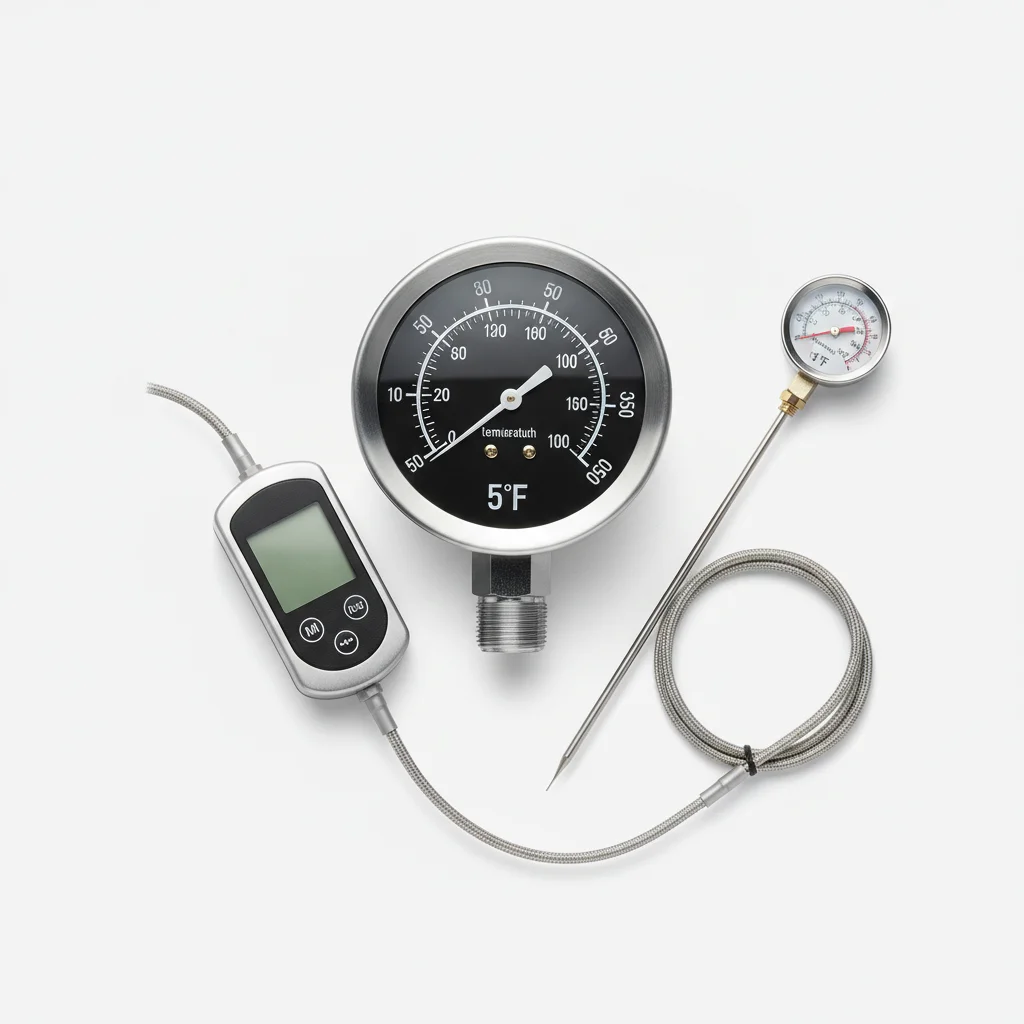
Charcoal grill temperature gauges can be surprisingly inaccurate, with many built-in models deviating by as much as 50 degrees Fahrenheit from the actual cooking temperature. This discrepancy often stems from their placement in the dome, which measures ambient air rather than the heat at grate level where food cooks. For precise grilling, understanding these limitations and utilizing alternative methods is crucial.
Why Built-In Gauges Fall Short
Most charcoal grills come equipped with a thermometer embedded in the lid. While convenient, this placement is inherently flawed for accurate temperature readings. Heat rises, and the air circulating at the top of the grill dome is often significantly cooler than the direct heat radiating from the coals at the cooking surface. Furthermore, the quality of these factory-installed gauges can vary widely, with many being inexpensive bimetallic thermometers that lack calibration and precision. Factors like wind, ambient temperature, and even the type of charcoal used can further influence these readings, making them unreliable for consistent results.
The Importance of Grate-Level Measurement
For truly effective charcoal grilling, the temperature at the grate level is what matters most. This is where your food is cooking, and it’s the temperature that directly impacts doneness and char. Relying solely on a lid-mounted gauge can lead to overcooked or undercooked food, as you might be adjusting your vents based on an incorrect perception of the heat. Achieving consistent results, especially for longer cooks like smoking or roasting, necessitates knowing the exact temperature where the action happens.
Recommended Alternatives for Accuracy
|
Our Picks for the Best Charcoal Grill in 2026
As an Amazon Associate I earn from qualifying purchases.
|
||
| Num | Product | Action |
|---|---|---|
| 1 | Barrel Charcoal Grill, Large Charcoal Grills with Side Shelf, Outdoor BBQ Grill,Perfect for Backyard Camping, Patio Parties, and Picnics |

|
| 2 | Charcoal Grill Outdoor BBQ Grill, Barrel Charcoal Grills with Side Table, with Nearly 500 Sq.In. Cooking Grid Area, Outdoor Backyard Camping Picnics, Patio and Parties, Black |
|
| 3 | Weber Jumbo Joe Charcoal Grill, 18‑Inch, Black – Lightweight Portable Kettle BBQ Grill with Tuck‑N‑Carry® Lid Lock for Camping, Tailgating & Outdoor Cooking |
|
| 4 | Royal Gourmet CD1824M 24-Inch Charcoal Grill, BBQ Smoker with Handle and Folding Table, Perfect for Outdoor Patio, Garden and Backyard Grilling, Black, Medium |
|
| 5 | Weber Original Kettle Premium Charcoal Grill, 22-Inch, Copper – Outdoor BBQ Grill with Built‑In Thermometer, Heat Control Dampers & One‑Touch™ Cleaning System |
|
| 6 | Char-Griller® Patio Pro Charcoal Grill and Smoker with Cast Iron Grates, Premium Metal Shelf and Damper Control, 250 Cooking Square Inches in Black, Model 1616 |
|
| 7 | Char-Griller CG30040725 22-inch Kettle Charcoal Grill and Smoker - Steel, Black - 363 sq. in. Cooking Area |
|
| 8 | Weber Original Kettle Charcoal Grill, 22-Inch, Black – Classic Outdoor BBQ Grill with One‑Touch™ Cleaning System & Precise Temperature Control Dampers |
|
| 9 | Weber Original Kettle Charcoal Grill, 18-Inch, Black – Classic Outdoor BBQ Grill with One‑Touch™ Cleaning System & Precise Temperature Control Dampers |
|
| 10 | Weber Original Kettle Premium Charcoal Grill, 22-Inch, Black – Outdoor BBQ Grill with Built‑In Thermometer, Heat Control Dampers & One‑Touch™ Cleaning System |
|
To overcome the inaccuracies of built-in gauges, grill masters often turn to more precise tools. Probe thermometers are the gold standard, offering real-time temperature readings directly at the grate. These typically consist of a heat-resistant probe that can be placed on the cooking surface or even inserted into the food itself, connected to an external display. Wireless models offer even greater convenience, allowing you to monitor temperatures from a distance. Another effective option is a high-quality instant-read thermometer for quick checks of food internal temperatures.
- Digital probe thermometers for grate-level monitoring
- Wireless thermometers for remote temperature tracking
- Instant-read thermometers for quick food checks
- Calibrated oven thermometers placed on the grate
- Infrared thermometers for surface temperature readings
Calibrating Your Existing Gauge
While not always perfectly accurate, you can attempt to calibrate your charcoal grill’s built-in thermometer to get a better sense of its deviation. A simple method involves the ice bath test: fill a glass with crushed ice and a small amount of water, then insert the thermometer probe. It should read 32°F (0°C). For a boiling water test, place the probe in vigorously boiling water; it should read 212°F (100°C) at sea level. If your gauge is adjustable, you can recalibrate it. Otherwise, knowing its consistent offset can help you make mental adjustments during your cook. Remember, even a calibrated lid thermometer is still measuring dome temperature, not grate temperature.
Making Temperature Adjustments Based on Accurate Readings
Once you have accurate grate-level temperature readings, you can make informed adjustments to your charcoal grill. To increase temperature, open the bottom air vents more to provide more oxygen to the coals. To decrease temperature, close the bottom vents slightly. The top vent primarily controls airflow out of the grill and can also influence temperature, but the bottom vents are your primary control for heat intensity. Consistent monitoring with a reliable thermometer allows for precise adjustments, leading to perfectly cooked meals every time.Investing in a quality digital thermometer is one of the best upgrades you can make for your grilling experience.

I appreciate the info on how inaccurate the factory-installed gauges can be. Mine seems to be off by a good bit, maybe 30-40 degrees. My only complaint is that it didn’t recommend a specific brand for a more accurate thermometer. Still, it’s good to know I’m not crazy for thinking my grill was running cooler than it said.
This was super helpful! I’ve been struggling with consistent temperatures on my charcoal grill for ages, and I always blamed myself. Learning that the bimetallic thermometers in the lid are often cheap and inaccurate explains everything. I’m excited to try using a different method to get precise grilling temperatures from now on.
Spot on about the temperature discrepancy! I’ve noticed my food cooking slower than expected, even when the lid gauge showed a high temp. The explanation about ambient air versus grate level heat is a game-changer. I’m finally understanding why my briskets were always a bit undercooked. Thanks for clarifying this common problem.
I always wondered why my ribs weren’t coming out right, even when the lid thermometer said I was at the perfect temp. It makes so much sense now that the dome placement is the issue. I’m definitely going to invest in a good grate-level thermometer after reading this. It’s frustrating how off those built-in gauges can be.