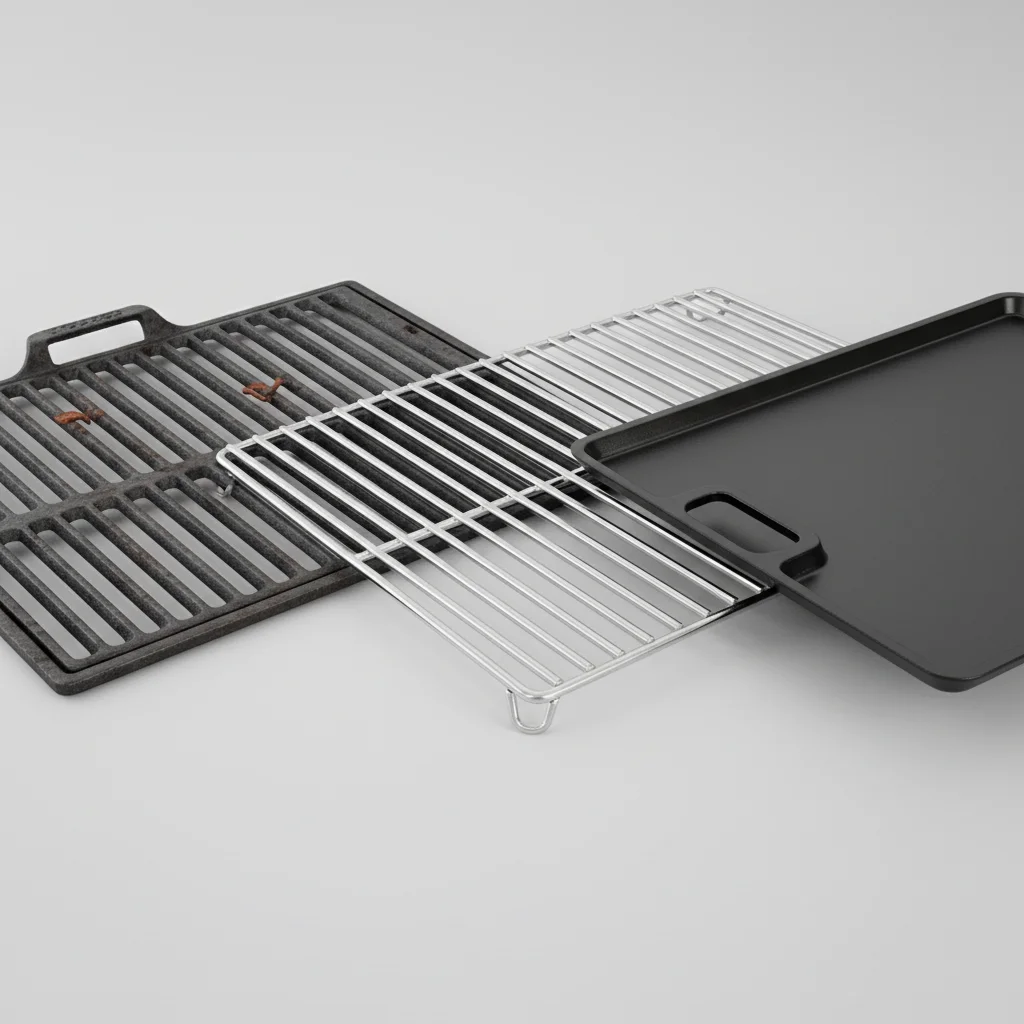
Choosing the right charcoal grill grates significantly impacts your grilling experience, affecting heat distribution, food release, and overall durability. There are primarily four types of materials used for grill grates: cast iron, stainless steel, porcelain-enameled cast iron, and chrome-plated steel. Each offers distinct advantages and disadvantages, making the “best” choice dependent on your grilling style and maintenance commitment.
Cast Iron Grill Grates: The Searing Champion
Cast iron grates are renowned for their exceptional heat retention and ability to create perfect sear marks. Once heated, they maintain a consistent temperature, which is ideal for cooking steaks, burgers, and other meats that benefit from high, direct heat. However, cast iron requires diligent seasoning and maintenance to prevent rust. If not properly cared for, they can corrode quickly, impacting both performance and longevity. For best charcoal grills roundups on this site.
Regular cleaning and re-oiling after each use are crucial for cast iron grates. Many grill masters swear by their cast iron for the superior flavor and texture it imparts to food, often developing a natural non-stick surface over time with proper seasoning.
Stainless Steel Grill Grates: Durability and Low Maintenance
Stainless steel grates are a popular choice due to their excellent corrosion resistance and ease of cleaning. They don’t retain heat as effectively as cast iron, but they heat up quickly and distribute heat evenly. This material is highly durable and less prone to rust, making it a low-maintenance option for frequent grillers. While they may not achieve the same intense sear as cast iron, they are versatile enough for a wide range of foods.
For those who prioritize convenience and longevity without sacrificing too much performance, stainless steel is an outstanding option. They are also generally lighter than cast iron, making them easier to handle and clean.
Porcelain-Enameled Cast Iron Grates: The Best of Both Worlds?
|
Our Picks for the Best Charcoal Grill in 2026
As an Amazon Associate I earn from qualifying purchases.
|
||
| Num | Product | Action |
|---|---|---|
| 1 | Royal Gourmet CD1824M 24-Inch Charcoal Grill, BBQ Smoker with Handle and Folding Table, Perfect for Outdoor Patio, Garden and Backyard Grilling, Black, Medium |

|
| 2 | Char-Griller CG30040725 22-inch Kettle Charcoal Grill and Smoker - Steel, Black - 363 sq. in. Cooking Area |
|
| 3 | Weber Jumbo Joe Charcoal Grill, 18‑Inch, Black – Lightweight Portable Kettle BBQ Grill with Tuck‑N‑Carry® Lid Lock for Camping, Tailgating & Outdoor Cooking |
|
| 4 | Weber Original Kettle Charcoal Grill, 22-Inch, Black – Classic Outdoor BBQ Grill with One‑Touch™ Cleaning System & Precise Temperature Control Dampers |
|
| 5 | Weber Original Kettle Premium Charcoal Grill, 22-Inch, Copper – Outdoor BBQ Grill with Built‑In Thermometer, Heat Control Dampers & One‑Touch™ Cleaning System |
|
| 6 | Weber Original Kettle Charcoal Grill, 18-Inch, Black – Classic Outdoor BBQ Grill with One‑Touch™ Cleaning System & Precise Temperature Control Dampers |
|
| 7 | Weber Original Kettle Premium Charcoal Grill, 22-Inch, Black – Outdoor BBQ Grill with Built‑In Thermometer, Heat Control Dampers & One‑Touch™ Cleaning System |
|
| 8 | Char-Griller® Patio Pro Charcoal Grill and Smoker with Cast Iron Grates, Premium Metal Shelf and Damper Control, 250 Cooking Square Inches in Black, Model 1616 |
|
| 9 | Barrel Charcoal Grill, Large Charcoal Grills with Side Shelf, Outdoor BBQ Grill,Perfect for Backyard Camping, Patio Parties, and Picnics |
|
| 10 | Charcoal Grill Outdoor BBQ Grill, Barrel Charcoal Grills with Side Table, with Nearly 500 Sq.In. Cooking Grid Area, Outdoor Backyard Camping Picnics, Patio and Parties, Black |
|
Porcelain-enameled cast iron grates attempt to combine the heat retention benefits of cast iron with the rust resistance of a coated surface. The porcelain enamel coating prevents rust and makes cleaning much easier, as food is less likely to stick. However, the enamel can chip if struck or scraped, exposing the underlying cast iron to moisture and potential rust. Once chipped, the protective layer is compromised, and the grate’s lifespan can be significantly reduced.
These grates offer a good balance for many users, providing decent searing capabilities and easier maintenance than raw cast iron, provided they are handled with care.
Chrome-Plated Steel Grates: Budget-Friendly and Functional
Chrome-plated steel grates are often found in entry-level grills due to their lower cost. They are lightweight and heat up quickly, but their heat retention is minimal compared to other materials. The chrome plating provides a non-stick surface initially, but it can wear off over time, leading to rust and food sticking. These grates are suitable for occasional grilling and for those on a tighter budget, but they typically have the shortest lifespan among the options.
Key Considerations When Choosing Grill Grates
- Heat Retention: Cast iron excels, followed by porcelain-enameled cast iron.
- Durability: Stainless steel offers superior long-term resistance to wear and rust.
- Maintenance: Stainless steel and porcelain-enameled grates are easier to clean and maintain.
- Searing Capability: Cast iron provides the best sear marks.
- Cost: Chrome-plated steel is the most economical, while stainless steel and cast iron are generally more expensive.
Ultimately, the best charcoal grill grates for you will depend on your priorities. If you crave perfect sear marks and don’t mind the extra maintenance, cast iron is your go-to. For a balance of performance and ease of care, stainless steel or porcelain-enameled cast iron are excellent choices. If budget is your primary concern, chrome-plated steel can get the job done for lighter use.
