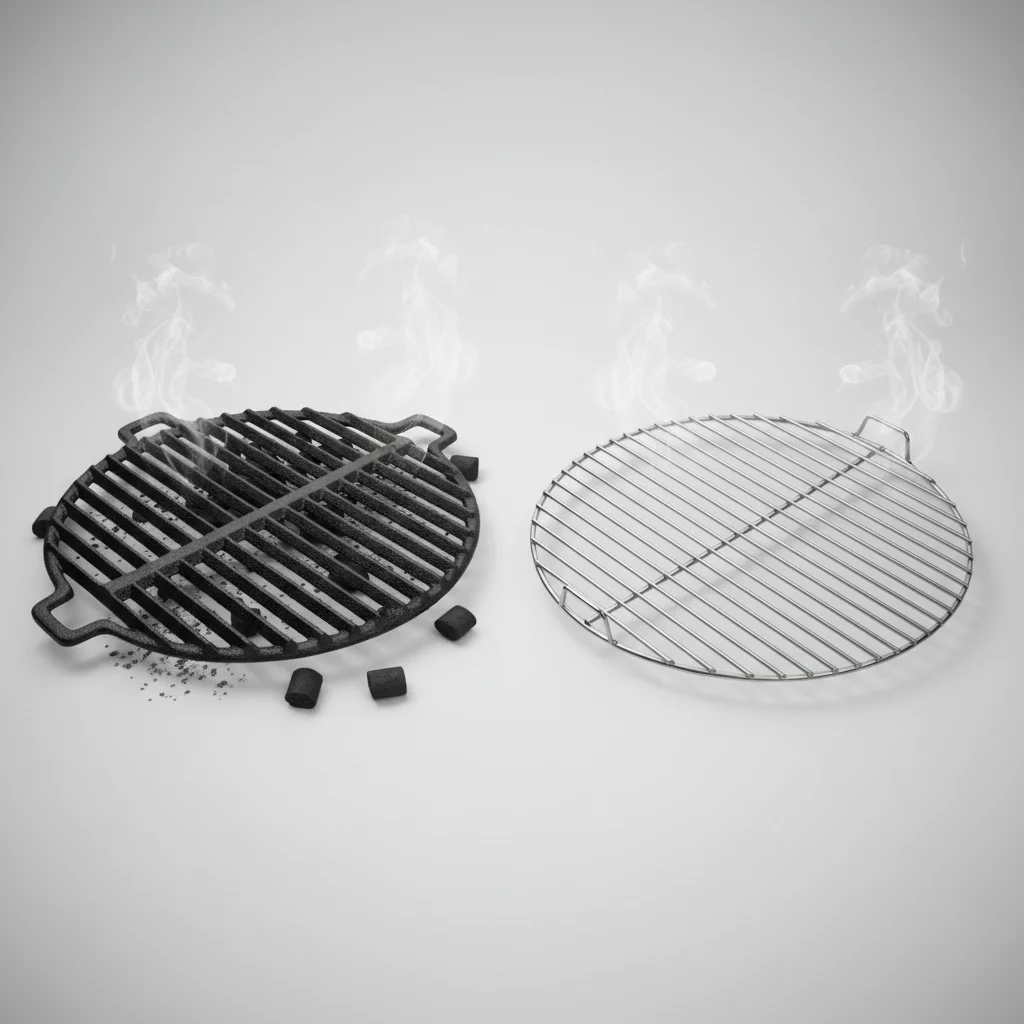
Choosing the right charcoal grill grates significantly impacts your grilling experience, affecting everything from heat retention to cleaning ease. When comparing cast iron and stainless steel, cast iron grates excel in heat retention and searing capabilities, while stainless steel offers superior durability and easier maintenance. Each material presents distinct advantages and disadvantages that cater to different grilling styles and preferences.
Cast Iron Grill Grates: The Searing Champion
Cast iron grates are renowned for their exceptional ability to retain and distribute heat evenly. This characteristic makes them ideal for achieving perfect sear marks on steaks, burgers, and other meats. The high thermal mass of cast iron ensures consistent cooking temperatures across the entire grilling surface, even when adding cold food. However, cast iron requires diligent seasoning to prevent rust and maintain its non-stick properties. Regular cleaning and oiling are essential to prolong its lifespan and ensure optimal performance.
- Superior heat retention for even cooking
- Excellent searing capabilities for perfect grill marks
- Durable construction, can last for decades with proper care
- Requires seasoning to prevent rust and maintain non-stick surface
- Heavier and more difficult to move or clean compared to stainless steel
Stainless Steel Grill Grates: Durability and Easy Care
Stainless steel grates offer a compelling alternative, particularly for those prioritizing durability and ease of maintenance. They are highly resistant to rust and corrosion, making them a low-maintenance option that can withstand various weather conditions. While stainless steel doesn’t retain heat as effectively as cast iron, it still provides good cooking performance and is much lighter, making it easier to handle and clean. High-quality stainless steel grates are a long-term investment for frequent grillers.
The ease of cleaning is a major advantage of stainless steel. Food particles are less likely to stick, and they can often be cleaned with a simple brush and soapy water, without the need for re-seasoning. This makes them a convenient choice for busy individuals or those who prefer a hassle-free grilling experience.
Heat Distribution and Searing Performance
|
Our Picks for the Best Charcoal Grill in 2026
As an Amazon Associate I earn from qualifying purchases.
|
||
| Num | Product | Action |
|---|---|---|
| 1 | Weber Original Kettle Charcoal Grill, 18-Inch, Black – Classic Outdoor BBQ Grill with One‑Touch™ Cleaning System & Precise Temperature Control Dampers |

|
| 2 | Char-Griller® Patio Pro Charcoal Grill and Smoker with Cast Iron Grates, Premium Metal Shelf and Damper Control, 250 Cooking Square Inches in Black, Model 1616 |
|
| 3 | Weber Jumbo Joe Charcoal Grill, 18‑Inch, Black – Lightweight Portable Kettle BBQ Grill with Tuck‑N‑Carry® Lid Lock for Camping, Tailgating & Outdoor Cooking |
|
| 4 | Char-Griller CG30040725 22-inch Kettle Charcoal Grill and Smoker - Steel, Black - 363 sq. in. Cooking Area |
|
| 5 | Weber Original Kettle Premium Charcoal Grill, 22-Inch, Black – Outdoor BBQ Grill with Built‑In Thermometer, Heat Control Dampers & One‑Touch™ Cleaning System |
|
| 6 | Charcoal Grill Outdoor BBQ Grill, Barrel Charcoal Grills with Side Table, with Nearly 500 Sq.In. Cooking Grid Area, Outdoor Backyard Camping Picnics, Patio and Parties, Black |
|
| 7 | Royal Gourmet CD1824M 24-Inch Charcoal Grill, BBQ Smoker with Handle and Folding Table, Perfect for Outdoor Patio, Garden and Backyard Grilling, Black, Medium |
|
| 8 | Weber Original Kettle Premium Charcoal Grill, 22-Inch, Copper – Outdoor BBQ Grill with Built‑In Thermometer, Heat Control Dampers & One‑Touch™ Cleaning System |
|
| 9 | Barrel Charcoal Grill, Large Charcoal Grills with Side Shelf, Outdoor BBQ Grill,Perfect for Backyard Camping, Patio Parties, and Picnics |
|
| 10 | Weber Original Kettle Charcoal Grill, 22-Inch, Black – Classic Outdoor BBQ Grill with One‑Touch™ Cleaning System & Precise Temperature Control Dampers |
|
When it comes to heat distribution, cast iron takes the lead. Its dense material absorbs and radiates heat with remarkable consistency, creating hot spots that are perfect for searing. This allows for a beautiful crust on meats while keeping the interior juicy. Stainless steel, while still performing well, tends to have more fluctuating temperatures across its surface, which can sometimes lead to uneven cooking if not managed carefully. For high-heat searing, cast iron is generally preferred by professional grill masters.
Maintenance and Longevity Considerations
The maintenance routines for cast iron and stainless steel grates differ significantly. Cast iron requires a dedicated regimen of cleaning, drying, and re-seasoning after each use to prevent rust and maintain its non-stick surface. Neglecting this can lead to rust and degradation over time. Stainless steel, on the other hand, is much more forgiving. It resists rust and corrosion, requiring only a simple scrub and rinse. This makes stainless steel a more practical choice for those who prefer minimal upkeep.
Cost and Availability
Generally, cast iron grates are often more affordable upfront, especially for standard sizes. However, specialized or thicker cast iron grates can be comparable in price to high-quality stainless steel. Stainless steel grates, particularly those made from higher grades of stainless steel, tend to be more expensive initially but offer long-term value due to their durability and low maintenance. Both types are widely available from various manufacturers and retailers, making it easy to find options that fit most grill models.
Which Grate is Right for Your Grilling Style?
Ultimately, the choice between cast iron and stainless steel grates depends on your personal grilling priorities. If you prioritize achieving perfect sear marks, consistent heat, and don’t mind the extra maintenance, cast iron is an excellent choice. If you value durability, ease of cleaning, and rust resistance, stainless steel will serve you well. Many grill enthusiasts even own both types, swapping them out depending on what they are cooking.

I finally switched to cast iron grates after years of using the flimsy ones that came with my grill. The difference in searing is incredible! My steaks have those perfect grill marks now, and the heat retention is so much better. It really makes a huge difference for consistent cooking.
I’ve been using stainless steel grates for a while now and I love how easy they are to clean. I don’t have to worry about seasoning them like cast iron, which is a big plus for me. They’re super durable too, no signs of wear even after a lot of use. Definitely recommend for low-maintenance grilling.
After reading about the even heat distribution, I decided to upgrade to cast iron grates for my charcoal grill. It’s been a game changer for cooking larger cuts of meat. Everything cooks more uniformly, and I don’t have those hot and cold spots anymore. Best upgrade I’ve made to my grill in years.
I tried the cast iron grates because I heard they were great for searing, and they do work well for that. My only complaint is the seasoning process. It’s a bit of a hassle to keep up with, and I’ve had a few rust spots pop up even with regular care. I might go back to stainless steel next time.