The sizzle of food on a hot charcoal grill is one of life’s simple pleasures, a hallmark of backyard gatherings and delicious outdoor cooking. However, few things disrupt this joy like discovering a layer of rust on your beloved grill. Rust doesn’t just look unsightly; it can compromise the structural integrity of your grill, impart a metallic taste to your food, and even pose health concerns if ingested. Fortunately, a rusty charcoal grill isn’t a lost cause. With a bit of elbow grease, the right tools, and safe DIY methods, you can restore your grill to its former glory, ensuring many more years of flavorful barbecues. This guide will walk you through understanding why rust forms, gathering your cleaning arsenal, step-by-step removal techniques, and crucial prevention tips to keep the orange menace at bay.
Understanding Rust: Why Your Grill Gets Rusty
Rust, scientifically known as iron oxide, is the result of iron or steel reacting with oxygen and moisture. Given that most charcoal grills are made of metal and frequently exposed to the elements, they are highly susceptible to corrosion. Several common factors contribute to rust formation on your grill, transforming shiny metal into a reddish-brown eyesore.
Primarily, moisture is the main culprit. Whether it’s rain, high humidity, condensation from temperature changes, or even residual water after cleaning, prolonged exposure to moisture creates the perfect environment for oxidation. Beyond environmental factors, cooking residue like grease, sauces, and food particles left on grates can trap moisture against the metal surface, accelerating the corrosive process. For those living near coastal areas, salt in the air can further speed up rusting. Additionally, any scratches or chips in the grill’s protective enamel or stainless-steel coatings expose the underlying metal to oxygen and moisture, creating vulnerable spots. Improper storage, such as leaving your charcoal grill uncovered or in damp locations, also significantly increases its risk of rust.
> “Ignoring rust on your grill isn’t just an aesthetic issue; heavy rust can degrade the metal, potentially affecting food quality and shortening your grill’s lifespan.”
Essential Tools and Supplies for Rust Removal
Before you dive into cleaning your rusty charcoal grill, assembling the right tools and supplies is crucial for a safe and effective process. Having everything at hand will streamline your efforts and ensure you tackle rust efficiently.
For mechanical removal, you’ll need abrasive tools such as a sturdy wire grill brush (preferably stainless steel bristles for durability), medium to coarse-grit sandpaper (80-120 grit is effective for heavier rust), steel wool, or even a crumpled ball of aluminum foil for scrubbing. A metal scraper or putty knife can be helpful for dislodging stubborn, flaking rust. When it comes to cleaning solutions, white vinegar is a versatile acidic option, often used for soaking or in combination with baking soda. Baking soda, a natural abrasive and mild alkaline, is excellent for paste applications. Lemon juice and salt also make for an effective natural paste. For tougher rust, you might consider a commercial rust remover, but always ensure it’s labeled as non-toxic and food-safe, and follow its instructions carefully. Finally, always prioritize safety by wearing heavy-duty gloves to protect your hands from rust particles and cleaning agents, and eye protection to shield against flying debris. Don’t forget cloths, paper towels, a spray bottle for solutions, a large tub for soaking parts, and cooking oil (like vegetable or canola) for the crucial re-seasoning step.
Step-by-Step Guide to Safely Cleaning a Rusty Charcoal Grill
Restoring your charcoal grill from rust requires a methodical approach, ensuring safety and thoroughness at each stage. Follow these steps to bring your grill back to life.
Begin by ensuring your grill is completely cool to the touch. Remove any leftover charcoal, ash, or food debris from previous grilling sessions and dispose of them properly. Lay down a tarp or old newspapers under your grill to protect your workspace from rust flakes and cleaning solutions. Next, disassemble your grill by removing the grates, charcoal tray, and any other detachable components. This allows for more comprehensive cleaning of each part. For grates with significant build-up, a pre-soak can work wonders. Fill a large tub or plastic bag with a solution of warm water and dish soap, or a 1:2 ratio of white vinegar to water, and submerge the rusty parts for several hours or overnight. This helps to loosen grime and surface rust, making subsequent cleaning much easier.
Mechanical Rust Removal
|
Our Picks for the Best Charcoal Grill in 2026
As an Amazon Associate I earn from qualifying purchases.
|
||
| Num | Product | Action |
|---|---|---|
| 1 | Weber Original Kettle Premium Charcoal Grill, 22-Inch, Copper – Outdoor BBQ Grill with Built‑In Thermometer, Heat Control Dampers & One‑Touch™ Cleaning System |

|
| 2 | Royal Gourmet CD1824M 24-Inch Charcoal Grill, BBQ Smoker with Handle and Folding Table, Perfect for Outdoor Patio, Garden and Backyard Grilling, Black, Medium |
|
| 3 | Weber Original Kettle Charcoal Grill, 18-Inch, Black – Classic Outdoor BBQ Grill with One‑Touch™ Cleaning System & Precise Temperature Control Dampers |
|
| 4 | Char-Griller® Patio Pro Charcoal Grill and Smoker with Cast Iron Grates, Premium Metal Shelf and Damper Control, 250 Cooking Square Inches in Black, Model 1616 |
|
| 5 | Weber Original Kettle Premium Charcoal Grill, 22-Inch, Black – Outdoor BBQ Grill with Built‑In Thermometer, Heat Control Dampers & One‑Touch™ Cleaning System |
|
| 6 | Weber Jumbo Joe Charcoal Grill, 18‑Inch, Black – Lightweight Portable Kettle BBQ Grill with Tuck‑N‑Carry® Lid Lock for Camping, Tailgating & Outdoor Cooking |
|
| 7 | Weber Original Kettle Charcoal Grill, 22-Inch, Black – Classic Outdoor BBQ Grill with One‑Touch™ Cleaning System & Precise Temperature Control Dampers |
|
| 8 | Char-Griller CG30040725 22-inch Kettle Charcoal Grill and Smoker - Steel, Black - 363 sq. in. Cooking Area |
|
| 9 | Charcoal Grill Outdoor BBQ Grill, Barrel Charcoal Grills with Side Table, with Nearly 500 Sq.In. Cooking Grid Area, Outdoor Backyard Camping Picnics, Patio and Parties, Black |
|
| 10 | Barrel Charcoal Grill, Large Charcoal Grills with Side Shelf, Outdoor BBQ Grill,Perfect for Backyard Camping, Patio Parties, and Picnics |
|
For initial rust removal, a stiff wire brush is your best friend. Firmly scrub the rusty areas, applying consistent pressure to remove loose flakes and surface rust. For more stubborn or deeply pitted rust, switch to medium-grit sandpaper (80-120 grit) or a drill-mounted wire brush, if you’re comfortable. This approach helps you get down to the bare metal. Remember to wipe down the area with a damp cloth after brushing or sanding to clear away rust particles and dust.
Natural Rust Treatment
Once mechanical removal has taken care of the loose rust, you can apply natural rust-fighting agents. A popular method is the baking soda and vinegar paste:
- In a bowl, combine ½ cup of baking soda with ¼ cup of white vinegar, stirring until a thick, spreadable paste forms. Adjust proportions as needed.
- Apply the paste generously to the rusty areas, ensuring all spots are covered.
- Allow the paste to sit for 15-30 minutes, giving the mixture time to break down the rust.
- After the paste has set, scrub away the rust with a grill brush, steel wool, or a crumpled aluminum foil ball. The abrasive nature of the baking soda combined with the acidity of the vinegar proves highly effective.
Alternatively, you can try a vinegar soak: Submerge heavily rusted grates in a large tub filled with white vinegar overnight (at least 8 hours). The acetic acid in the vinegar will dissolve the rust, making it easier to scrub off the next day. Another option is a lemon juice and salt paste: Mix lemon juice with coarse salt to create a paste, apply it to the rust, let it sit for about 30 minutes, then scrub and rinse. The citric acid in lemon juice acts similarly to vinegar.
Thorough Rinsing and Drying
After scrubbing and treating the rust, thoroughly rinse all cleaned grill components with warm water to remove any remaining cleaning solutions, rust particles, and debris. This step is critical, especially if using commercial cleaners, to prevent chemical residues from lingering on surfaces. Once rinsed, immediately dry all parts completely with a clean cloth or paper towels. Leaving any moisture behind will invite rust to return quickly. For metal parts like grates, applying a thin layer of high-smoke-point cooking oil (such as vegetable or canola oil) after drying, followed by briefly heating the grates, helps to create a seasoned, protective barrier.
Comparison of Rust Removal Methods
Choosing the right rust removal method depends on the severity of the rust and the type of grill component. Here’s a comparison to help you decide:
| Method | Effectiveness | Safety Concerns | Best For |
|---|---|---|---|
| Wire Brush/Scraper | High for loose/surface rust | Physical injury risk (wear gloves) | Initial removal of flaking rust, routine cleaning |
| Vinegar Soak | Moderate to high | Low (acidic, wear gloves for prolonged contact) | Light to moderate surface rust, overnight soaking of grates |
| Baking Soda Paste | Mild to moderate | Very low | Minor rust spots, gentle cleaning, combined with vinegar |
| Lemon Juice & Salt Paste | Mild to moderate | Low (acidic) | Minor rust spots, eco-friendly option |
| Commercial Rust Remover | High for stubborn rust | Moderate (chemical, follow instructions, food-safe brands only) | Heavy, persistent rust, specific affected areas |
| Sandpaper/Power Tools | High for deep rust | Requires care, can damage coatings | Severe corrosion on large, flat metal surfaces |
Choosing the Right Cleaning Method for Your Grill
Selecting the appropriate cleaning method for your charcoal grill depends primarily on the extent of the rust, the material of your grill components, and how much time and effort you are willing to invest.
First, assess the rust severity. For light, superficial rust that’s just beginning to form, a simple wire brush and a quick wipe-down might suffice. If you notice moderate rust patches that are flaking or have created a thin layer, natural solutions like a vinegar soak or a baking soda and vinegar paste will be more effective. For severe corrosion or deep pitting, especially on critical parts like grates or the firebox, you might need to combine mechanical abrasion (sanding or wire brushing) with a natural treatment, or even consider a food-safe commercial rust remover for targeted application. Second, consider your grill material. Cast iron grates, while excellent for heat retention, are particularly prone to rust and benefit greatly from thorough drying and re-seasoning after cleaning. Stainless steel grates are more rust-resistant but can still develop surface rust if neglected. Avoid harsh abrasives like steel wool on enamel-coated parts to prevent scratching the protective layer. Lastly, balance your time and effort. Natural methods often require longer soaking times but are generally safer and use readily available household items. Commercial removers can be quicker but demand careful handling and thorough rinsing to ensure no chemical residues remain. Always prioritize safety and ensure any method you choose is suitable for a surface that will come into contact with food.
Maintaining Your Charcoal Grill: Tips for Rust Prevention
Preventing rust is far easier than removing it. Implementing a consistent maintenance routine will significantly extend the life of your charcoal grill and ensure it’s always ready for your next barbecue.
The most crucial step is proper cleaning after each use. Once your grill cools, scrape off any food debris and grease from the grates and the interior. For charcoal grills, always empty the ash after each session, as ash retains moisture and can accelerate rust formation. After cleaning, ensure all components are completely dry. Moisture is rust’s biggest ally, so a dry environment is paramount. Secondly, seasoning your grill grates creates a protective barrier. Similar to cast iron cookware, apply a thin layer of high-smoke-point cooking oil (like vegetable or canola oil) to your grates after cleaning and drying. Then, briefly heat the grates to bond the oil to the metal, forming a non-stick and rust-resistant surface. This seasoning should be done regularly, especially after major cleaning. For effective storage, invest in a high-quality, custom-fit grill cover that is waterproof and breathable. Store your grill in a dry, covered area like a garage or shed, especially during off-seasons or prolonged periods of non-use. If storing outdoors, ensure the cover fits snugly to protect against rain and humidity. Finally, regular inspections can catch rust spots early before they become major problems. Check around hinges, handles, and grate edges frequently. If you spot any rust, address it immediately with a quick scrub and re-seasoning to prevent it from spreading.
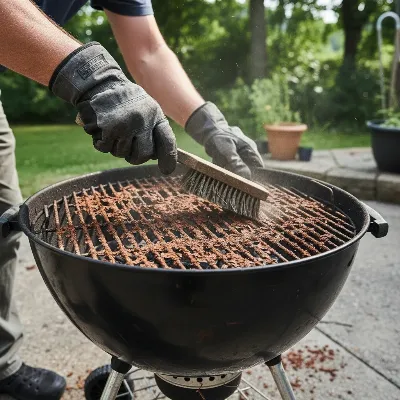 A person cleaning a rusty charcoal grill grate with a wire brush outdoors, focused on scrubbing the rust off.
Conclusion
A rusty charcoal grill doesn’t have to signal the end of its grilling days. By understanding the causes of rust and employing safe, effective DIY cleaning methods, you can restore its functionality and appearance. From abrasive scrubbing with a wire brush to the chemical reaction of vinegar and baking soda, there’s a solution for every level of rust. Remember to always prioritize safety with proper protective gear and ensure thorough rinsing and drying after each cleaning session. More importantly, consistent maintenance—including routine cleaning, proper seasoning, and thoughtful storage—is your best defense against future corrosion. With these tips, your charcoal grill will be a reliable centerpiece for countless delicious outdoor meals for years to come. What’s your go-to method for keeping your grill rust-free all year long?
Frequently Asked Questions
Is it safe to cook on rusty charcoal grill grates?
Small spots of rust on grill grates are generally not a significant health concern, but cooking on heavily rusted grates can impact the flavor of your food, imparting a metallic taste. The USDA advises against using rusty cooking surfaces or utensils as rust particles can transfer to food and may harbor harmful bacteria. It’s always best to clean or replace rusted parts before grilling for safety and optimal taste.
What are the best natural rust removers for a charcoal grill?
White vinegar, baking soda, and a combination of lemon juice and salt are highly effective natural rust removers. White vinegar can be used for soaking grates overnight, while a paste made from baking soda and vinegar or lemon juice and salt can be applied, left to sit, and then scrubbed away. These methods are eco-friendly and use readily available household ingredients.
How often should I clean my charcoal grill to prevent rust?
To effectively prevent rust, you should clean your charcoal grill grates after every use, while they are still warm, to remove food debris and grease. Emptying ash after each session is also crucial. A more thorough deep clean, including seasoning the grates, is recommended every few months or at the beginning and end of grilling seasons.
Can I use steel wool on my charcoal grill grates?
Steel wool can be used to remove rust from cast iron or stainless steel grill grates, as its abrasive nature is effective at scouring away corrosion. However, use it with caution on enamel-coated grates, as it can scratch and damage the protective finish, making them more susceptible to future rust. Always rinse thoroughly after use.
How can I prevent my charcoal grill from rusting during winter storage?
To prevent rust during winter storage, ensure your grill is thoroughly cleaned, completely dry, and the grates are well-seasoned with cooking oil. Empty all ash. Then, cover your grill with a high-quality, custom-fit, waterproof, and breathable grill cover. Store it in a dry, covered area like a garage or shed to protect it from moisture and harsh weather conditions.
